Open Source • CI/CD Security
Runner Guard
Source-to-sink vulnerability scanner for GitHub Actions workflows. Detects injection paths, AI config hijacking, and supply chain steganography in your CI/CD pipelines - before they become breaches.
Detection Rules
Single Binary
Output Format
Dependencies
The Attack That Changed Everything
On March 1, 2026, an autonomous AI agent compromised multiple high-profile open-source projects in under 20 minutes - using misconfigured CI/CD pipelines. The attack exploited pull_request_target workflows that checked out fork code in privileged contexts, exfiltrating Personal Access Tokens through repository secrets. Runner Guard catches the exact vulnerability class that made it possible.
Supply Chain Steganography: GlassWorm
The GlassWorm campaign compromised 433+ components across GitHub, npm, and VS Code/OpenVSX using invisible Unicode characters - variation selectors, zero-width spaces, tag characters - to encode executable payloads hidden from code review, terminals, and even git diff. The decoded ZOMBI module performed credential harvesting, crypto wallet theft, and blockchain-based C2. Runner Guard detects this attack class at the byte level.
See It In Action
Built-in demo scenarios demonstrate each attack class against realistic vulnerable workflows.
Fork Checkout Kill Chain
The most common CI/CD pipeline attack: a pull_request_target workflow checks out fork code in the privileged base repository context, giving an attacker's build scripts full access to repository secrets.
RGS-001RGS-007RGS-009RGS-012runner-guard demo --scenario fork-checkout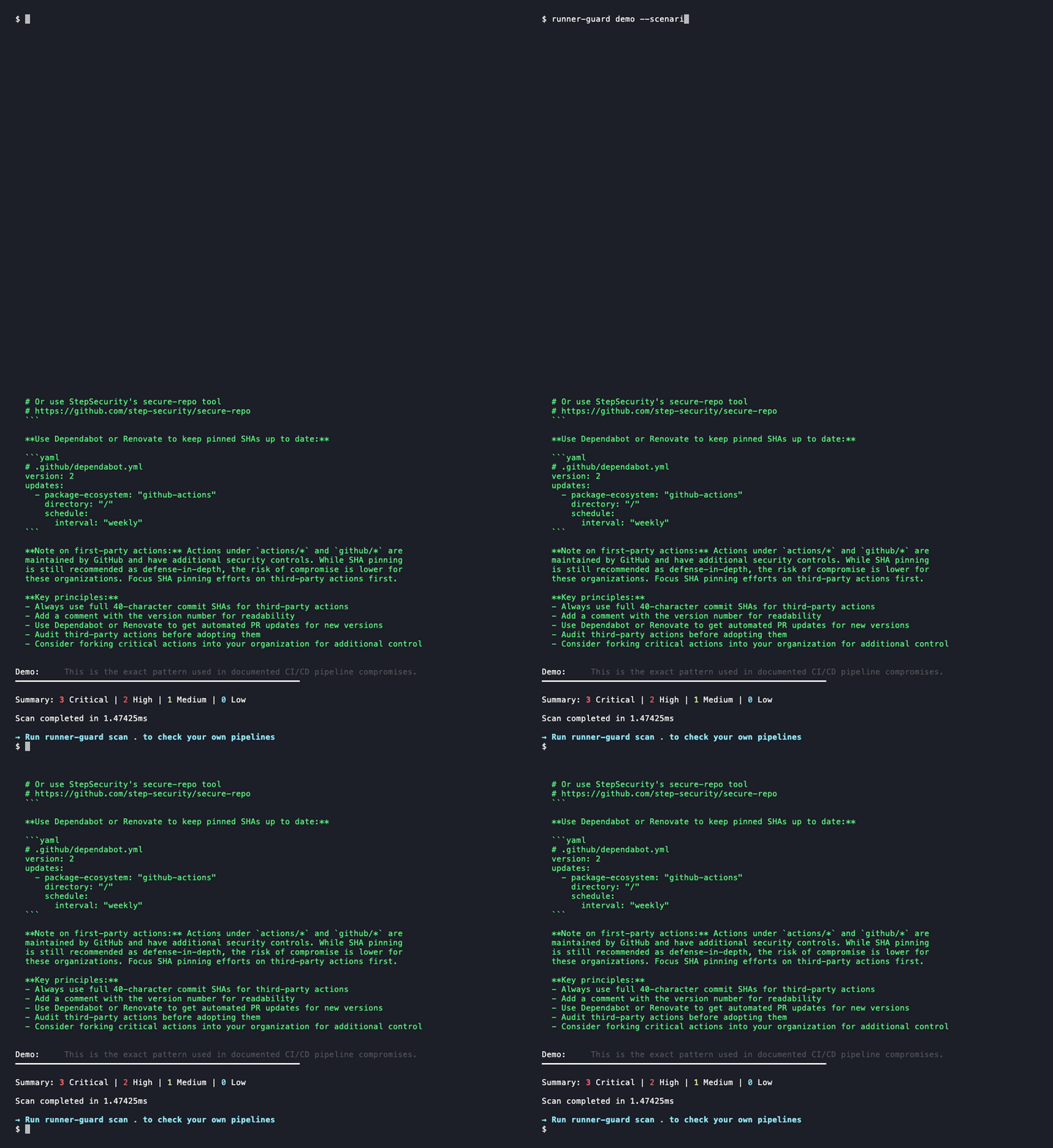
Expression Injection (Microsoft/Akri Pattern)
Modeled after the real-world vulnerability in Microsoft's Akri project. An issue_comment trigger interpolates attacker-controlled data directly into shell run blocks without sanitization.
RGS-002RGS-004RGS-006RGS-008runner-guard demo --scenario microsoft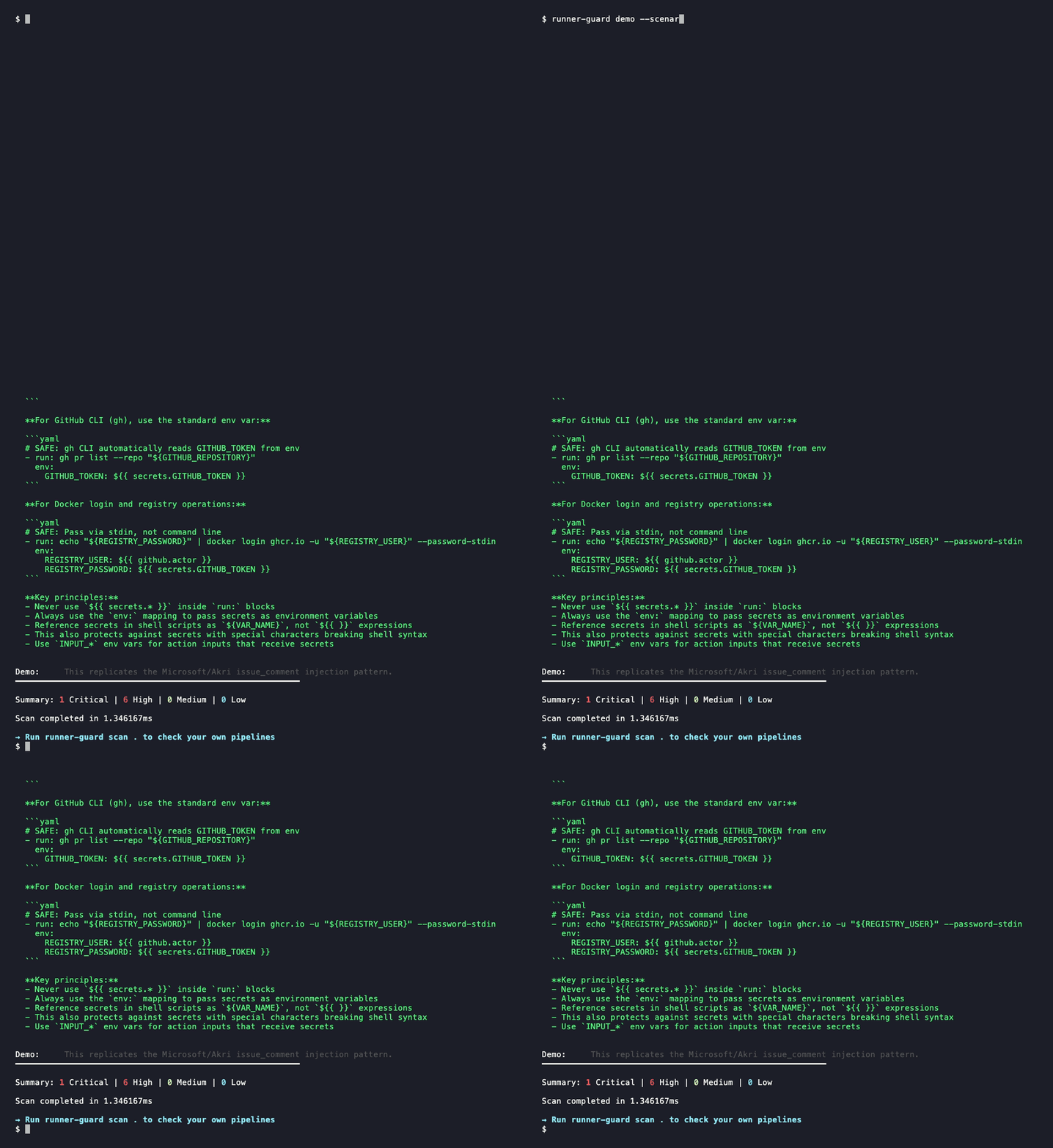
AI Configuration Injection
A novel attack surface unique to Runner Guard. When a fork checkout runs in a privileged context, an attacker can modify AI agent configuration files to hijack AI code review agents.
RGS-010RGS-011runner-guard demo --scenario ai-injection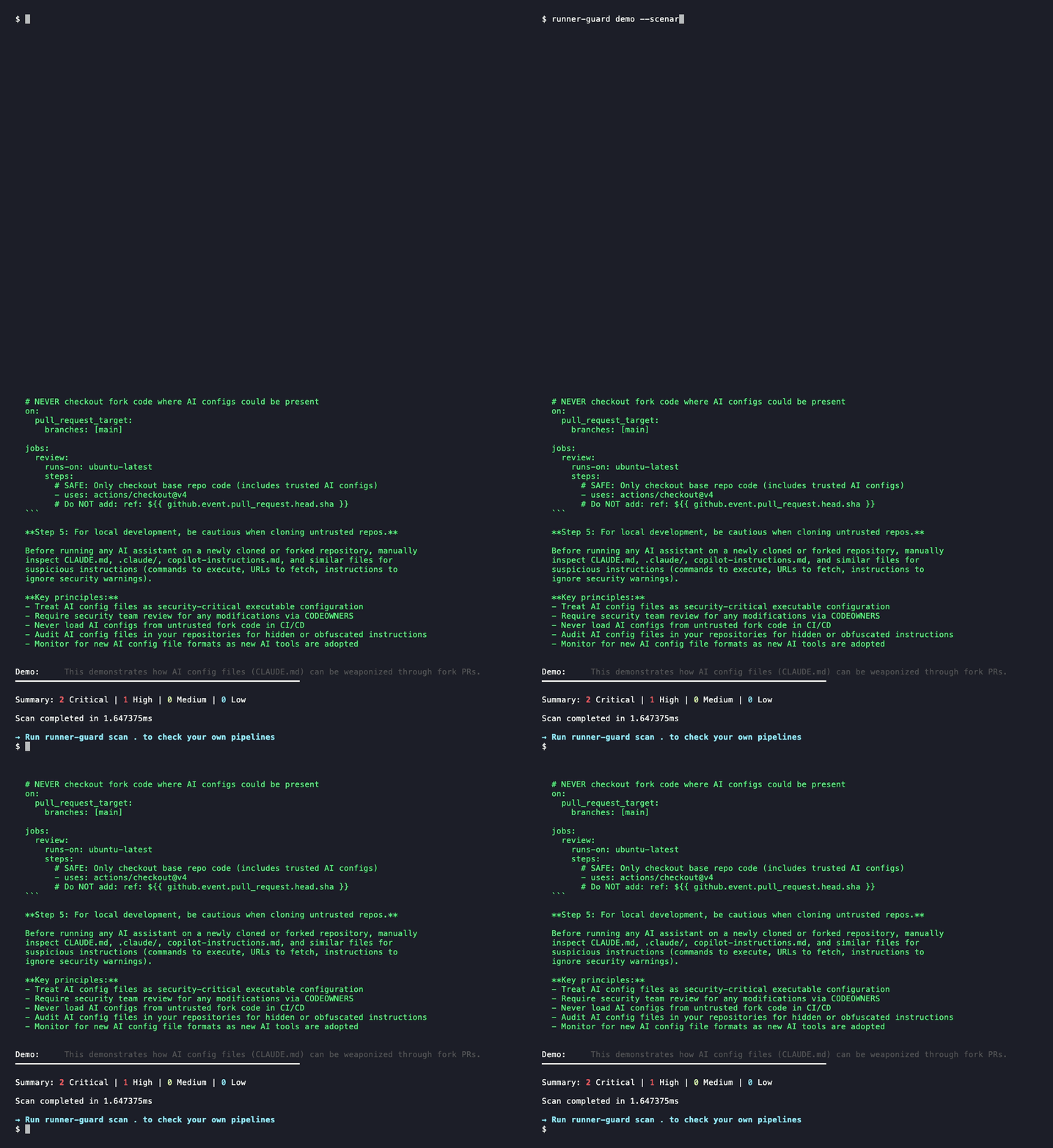
GlassWorm Supply Chain Attack
Detection of the GlassWorm campaign's invisible Unicode steganography technique that compromised 433+ components across GitHub, npm, and VS Code/OpenVSX.
RGS-016RGS-018runner-guard demo --scenario glassworm
Four-Stage Analysis Pipeline
Runner Guard traces attacker-controlled inputs through your workflows from source to sink, catching vulnerabilities that static linters miss.
Parser
Builds structured representation of YAML workflow files, matrix strategies, and composite actions
Source-to-Sink Tracker
Identifies and traces tainted data flows from attacker-controlled inputs to dangerous sinks
Rule Engine
Evaluates 18 YAML-defined rules with updatable threat signatures against parsed workflows
Reporter
Outputs findings in console, JSON, and SARIF formats for GitHub Code Scanning
18 Detection Rules
From critical fork checkout exploits and supply chain steganography to AI config injection - including attack vectors no other scanner detects. Click any rule for a deep dive.
RGS-001CriticalFork Checkout in Privileged Context
Detects pull_request_target workflows that check out fork code with secret access.
RGS-002CriticalBranch Name Injection
Catches attacker-controlled branch names used in shell commands or expressions.
RGS-016CriticalUnicode Steganography in Workflows
Byte-level scanning for invisible Unicode characters encoding hidden payloads in workflow YAML.
RGS-003HighFilename Injection
Identifies crafted filenames that inject commands when processed by workflows.
RGS-004HighIssue/Comment Body Injection
Detects attacker-controlled issue or comment content used unsafely in shell commands.
RGS-005HighCommit Message Injection
Catches commit messages interpolated into shell commands where they can execute code.
RGS-006HighPR Title/Body Injection
Flags pull request titles and body content used in shell contexts without sanitization.
RGS-007HighSecret Exfiltration via Fork
Detects patterns where secrets could be leaked through fork-initiated workflows.
RGS-008MediumExpression Injection in Conditional
Detects attacker-controlled data used in if: conditionals that may bypass security gates.
RGS-009MediumUnpinned Third-Party Actions
Flags actions referenced by tag instead of commit SHA, with auto-fix support.
RGS-010HighAI Config Injection
Uniquely detects attacks on CLAUDE.md, .cursorrules, copilot-instructions.md in fork checkouts.
RGS-011HighMCP Tooling Injection
Catches malicious .mcp.json modifications in fork checkout contexts.
RGS-012MediumExcessive Permissions
Flags workflows with overly broad permissions that violate least-privilege principles.
RGS-013LowDebug Logging Enabled
Warns when debug logging may expose secrets or sensitive runtime data.
RGS-014MediumCurl-Pipe-Bash Pattern
Detects piping remote scripts directly into a shell interpreter without verification.
RGS-017HighSteganography in Referenced Scripts
Invisible Unicode in files executed by workflows - setup.py, package.json, Dockerfiles, shell scripts.
RGS-018HighSuspicious Payload Execution
Eval+decode chains, known GlassWorm IOCs, and C2 patterns in workflow run blocks.
RGS-019MediumStep Output Advisory
Detects step outputs derived from attacker-controlled sources that may propagate tainted data downstream.
Use --rules or --group to run specific rule subsets.
Detection Is Just the Beginning
Runner Guard identifies CI/CD vulnerabilities before they're exploited. When attacks make it through, Vigilant's CyberDNA Intelligence Platform provides the forensic validation to prove what happened, how far it spread, and that it's been fully contained.
Supply Chain Steganography Detection
The GlassWorm campaign proved that code review alone isn't enough. Invisible Unicode characters encode executable payloads that bypass every human and automated review tool. Runner Guard performs byte-level scanning to catch what's invisible:
- Invisible Unicode in workflow YAML files (variation selectors, zero-width chars, tag characters)
- Hidden payloads in referenced scripts - setup.py, package.json, Dockerfiles
- Known GlassWorm IOC patterns and ZOMBI module signatures
- Dangerous eval+decode execution chains used for payload activation
- Updatable threat signatures via embedded signatures.yaml
$ runner-guard scan . --group steganography
CRITICAL RGS-016 unicode-steganography
ci.yml:42 - Invisible Unicode chars
detected (variation selectors, tags)
HIGH RGS-017 stego-referenced-script
ci.yml:58 - Hidden chars in script
referenced by workflow: setup.py
HIGH RGS-018 suspicious-payload
ci.yml:65 - Known IOC: ZOMBI module
decode pattern with eval chain
Found 3 issues (1 critical, 2 high)
AI Config Injection Detection
Runner Guard is the first scanner to detect attacks targeting AI coding assistant configurations in CI/CD pipelines. When a fork checkout runs in a privileged context, an attacker can modify these files to hijack AI-assisted development:
CLAUDE.md- Claude Code.cursorrules- Cursorcopilot-instructions.md- GitHub Copilot.mcp.json- MCP Tooling
$ runner-guard scan .
CRITICAL RGS-001 fork-checkout-exploit
ci.yml:15 - Checks out fork code in
pull_request_target with secret access
HIGH RGS-010 ai-config-injection
ci.yml:15 - Fork checkout enables
modification of CLAUDE.md, .cursorrules
HIGH RGS-011 mcp-config-injection
ci.yml:15 - Fork checkout enables
modification of .mcp.json
Found 3 issues (1 critical, 2 high)
Get Started in Seconds
Single binary. Zero dependencies. Choose your install method.
curl -sSfL https://raw.githubusercontent.com/Vigilant-LLC/runner-guard/main/install.sh | bashbrew install Vigilant-LLC/tap/runner-guardgo install github.com/Vigilant-LLC/runner-guard/cmd/runner-guard@latestQuick Usage
# Scan current repository
runner-guard scan .
# Run only steganography/supply-chain rules
runner-guard scan . --group steganography
# Run only AI config detection rules
runner-guard scan . --group ai-config
# Run specific rules only
runner-guard scan . --rules RGS-001,RGS-010,RGS-016
# Output SARIF for GitHub Code Scanning
runner-guard scan . --format sarif --output results.sarif
# CI gating - fail on high severity
runner-guard scan . --fail-on high
# View demo attack scenarios
runner-guard demo
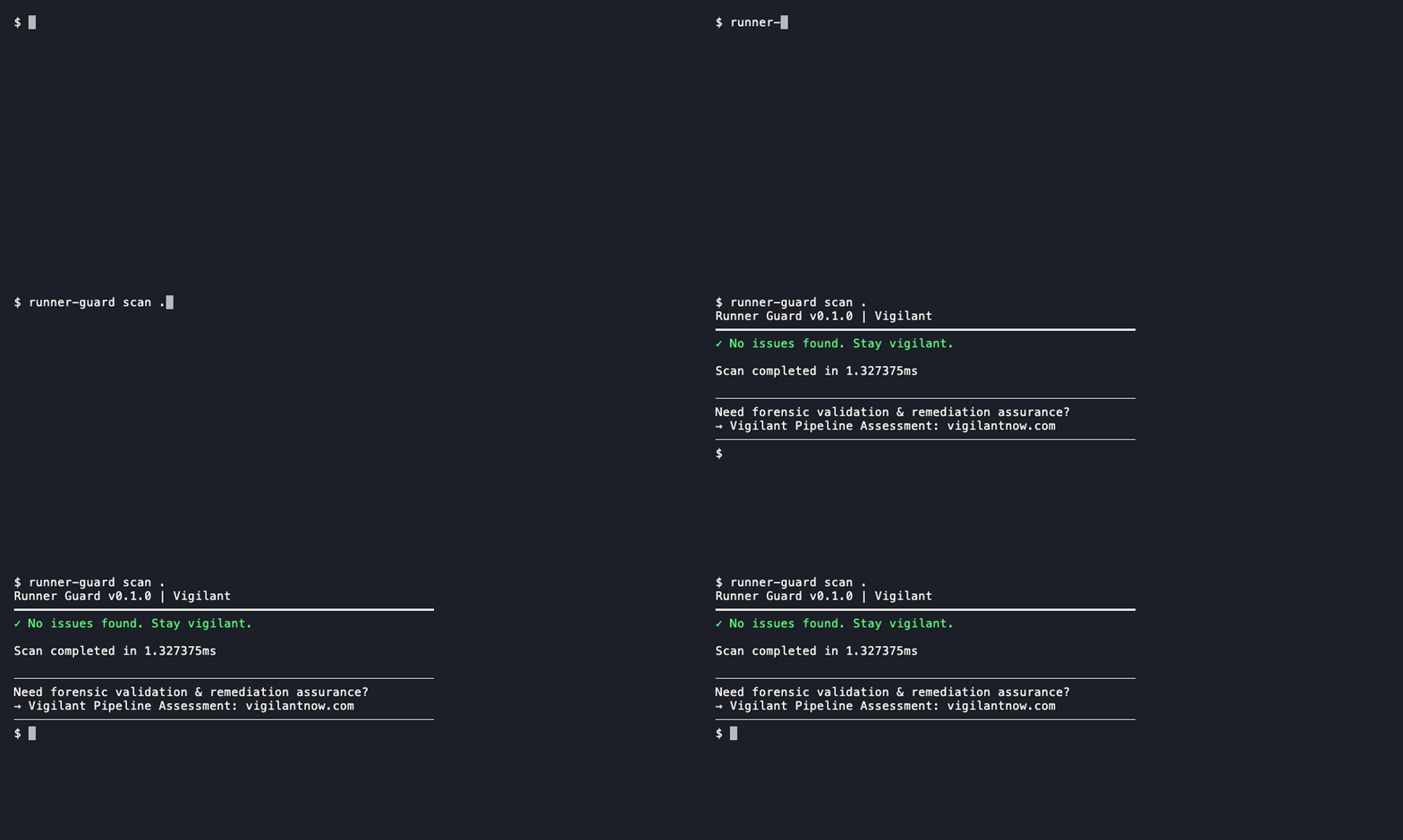
Drop-In GitHub Action
Add automated CI/CD security scanning to every pull request. Results appear directly in the GitHub Security tab.
name: Runner Guard Security Scan
on:
  pull_request:
    paths:
      - '.github/workflows/**'
      - 'CLAUDE.md'
      - '.claude/**'
      - '.mcp.json'
permissions:
  contents: read
  security-events: write
jobs:
  runner-guard:
    runs-on: ubuntu-latest
    steps:
      - uses: actions/checkout@v4
      - uses: Vigilant-LLC/runner-guard@v1
        with:
          fail-on: high
          sarif-upload: 'true'
          # Optional: filter by rule group or specific rules
          # group: 'injection,ai-config,steganography'
          # rules: 'RGS-001,RGS-010,RGS-016'
“Runner Guard detects the attack. CyberDNA proves it happened. See the difference forensic validation makes.”
Start a Free POVBuilt for Security Teams
Taint Analysis
Traces attacker-controlled inputs through expressions, variables, and shell commands to dangerous sinks.
Steganography Detection
Byte-level scanning for invisible Unicode payloads, GlassWorm IOCs, and eval+decode chains in workflows and referenced scripts.
AI Config Detection
First scanner to detect attacks on CLAUDE.md, .cursorrules, copilot-instructions.md, and .mcp.json in fork checkouts.
Auto-Fix
Pins unpinned actions to commit SHAs and extracts unsafe expressions into env mappings with shell-aware syntax for bash, PowerShell, and cmd.
Zero Dependencies
Single Go binary. No runtime, no framework, no package manager. Download and run.
SARIF Output
Native SARIF format integrates directly with GitHub Code Scanning and the Security tab.
Baseline Management
Suppress known findings to focus on new vulnerabilities. Clean signal, no noise.
Cross-Platform
Pre-built binaries for Linux, macOS, and Windows on both amd64 and arm64 architectures.
Remote Scanning
Scan any public GitHub repo by URL without cloning. Perfect for security audits and assessments.
Secure Your Pipelines Today
Runner Guard is free, open source, and AGPL-3.0 licensed. For organizations that need forensic validation, incident response, and continuous threat hunting - Vigilant's CyberDNA platform extends detection into full FVDR coverage.